🔴 Engineering Export
A Strategic Professional Approach

Approaching Export with a Methodical Strategy
Approaching export with a method means engineering each phase of the process, making it rational, replicable, and optimisable.
Often, companies enter international markets with a craft-based approach, relying on trial and error and improvisation. This may work in the short term, but if we aim to build a stable and profitable export activity, a system is needed—a well-defined strategic path that covers all essential aspects.
After organising the financial and operational elements of our business to solidify our export readiness, we can divide the activity into three interconnected yet distinct areas: Sales, Shipping, and Payment. Each of these requires a precise approach and structured management. Let’s explore them in detail.
1. Sales: Building the Foundations for Success
International commercial activity cannot be improvised.
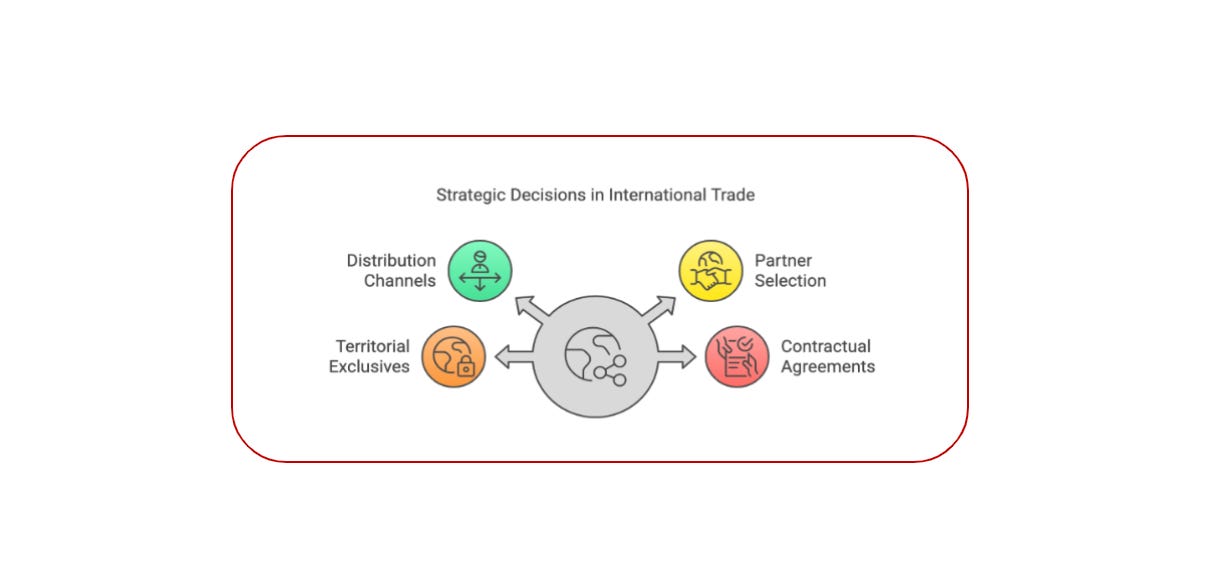
It starts with the clear definition of distribution channels: direct sales, agents, distributors, or online platforms.
Choosing commercial partners is a critical moment because an error in selection can jeopardise entire markets.
Another key issue is granting territorial exclusives. This must be carefully assessed—deciding to whom to grant them and for how long—to avoid situations where an importer blocks the market without delivering tangible results.
Then there is contractual law. Far too often, agreements are made without a solid written contract, leaving the door open to significant risks.
Every international sale must be based on a clear contract that defines the terms of supply, payment conditions, and any dispute resolution clauses. Without robust contracts, export becomes a game of Russian roulette.
2. Shipping: From Warehouse to Final Destination
Here, we enter the core of international logistics. Goods may travel by sea, air, or road, and each mode has its specific characteristics.
By Sea: Ideal for bulky loads and less time-sensitive deliveries. The relationship with the freight forwarder is crucial here, as a skilled intermediary can optimise costs and timelines while avoiding documentary issues that could block the goods at customs.
By Air: Expensive but indispensable for high-turnover or high-value products. It is essential to be familiar with transport restriction regulations to avoid delays and unpleasant surprises.
By Road: Predominant for intra-European deliveries. Delivery times are fast, but knowing the regulations of individual countries and managing customs documentation efficiently are critical.
A transversal issue is the relationship with freight forwarders.
Exporters must manage the relationship both with their trusted logistics partner and with forwarders appointed by the foreign buyer.
Any changes in responsibilities and costs must be regulated with clarity to prevent disputes.
Mastering Incoterms is essential for this purpose. These terms are not merely acronyms to include in a contract; they define the responsibilities of the seller and buyer at every stage of the shipment. Using them correctly reduces risks and unexpected costs.
Finally, there is the issue of cargo insurance. Too many companies overlook this aspect, relying on good fortune—a grave mistake. A well-thought-out insurance policy can protect against unforeseen losses and safeguard profit margins.
3. Payment: Security Comes First
This is the most delicate chapter: payment. A sale is only truly complete once the money has been received.
The risk of non-payment is always present, and exporters must know exactly which tools to use to protect themselves.
The most immediate solution is payment on delivery or advance payment. However, these methods are not always favoured by either the exporter or the foreign client.
The most secure and professional tool remains the Letter of Credit. This method ensures that the seller receives payment only upon presenting compliant documents. However, it is also the most complex to manage. It requires in-depth knowledge of its rules and meticulous preparation of the required documentation. Errors in documentation can lead to delayed or non-payment, with disastrous consequences.
Alternative tools include bank guarantees and trade credit insurance. Each method has its pros and cons, and exporters must know how to choose the most suitable one for each situation.
Conclusion: A Method to Succeed in Foreign Markets
Exporting is not an activity to be approached superficially or haphazardly. It requires a method—a structured path that allows each phase to be managed with competence and confidence.
Engineering export means building a solid system where sales, shipping, and payment are perfectly integrated and optimised.
Not only sales, but also shipping and payment—as part of the negotiation—can facilitate or hinder the successful conclusion of an international sale.
Expanding our knowledge arsenal means having more arrows in our quiver and more chances to overcome objections from the counterpart and successfully close any negotiation, whether it concerns a sale, a partnership, a joint venture, or strategic development agreements in international markets.
Those who work in this way do not rely on luck, but on preparation. And those who are prepared not only export successfully but do so with profit and continuity.
Roberto